
Intentional Communities Explored: My 10-day Quest for Connection
I visited eight diverse communities on my path to finding home

The sun had barely risen as my husband dropped me off with a smooch at the Denver airport. The crisp morning air fueled musings of a fresh start as I embarked on my 10-day mission: to find a community that would be perfect for us.
I checked in, dropped off my suitcase, and joined the seemingly endless security line. Exchanging glances, grimaces, and a few guffaws with those around me over the absurdity of our parade, all of us were united by a common effort — travel — yet each was on a unique journey.
The clamoring symphony of airport life was on full display — “Single file, one after the other!” a security agent admonished repeatedly, incessantly.
Trying to keep up with the strict instructions along with my fellow travelers, I first tasted the essence of what I would soon come to learn in the lush landscapes of North Carolina: Community is where you find it and where you foster it. And it can be found in the most unlikely places.
Intentional Communities
I’ve lived in a couple of intentional communities in the past — Dancing Rabbit Ecovillage in Missouri and Sunrise Ranch in northern Colorado. I like living in community. Getting to know your neighbors on a deeper level creates a strong sense of connection.
I like working, eating, meeting, and hanging out with friends and neighbors. And you can do a lot of that when you live with people who have common interests, goals, and values. It’s a richness you can’t get without living closely with others.
That kind of richness can include headache and heartache, too. But ultimately, I’ve found community life to be worth the effort.
My husband and I, wanting to be out on our own and closer to his work, moved from Sunrise Ranch out to the suburbs in a new development. We love our new home, but I quickly realized that I missed community life. I can’t walk down the street and start up a conversation with a friend. Our neighborhood isn’t set up for easy, regular chats. Other factors played a role, too, but it was the isolation that led to us thinking that we should find another place where we’d feel that sense of friendship and support that we felt in community.
The appeal of intentional communities
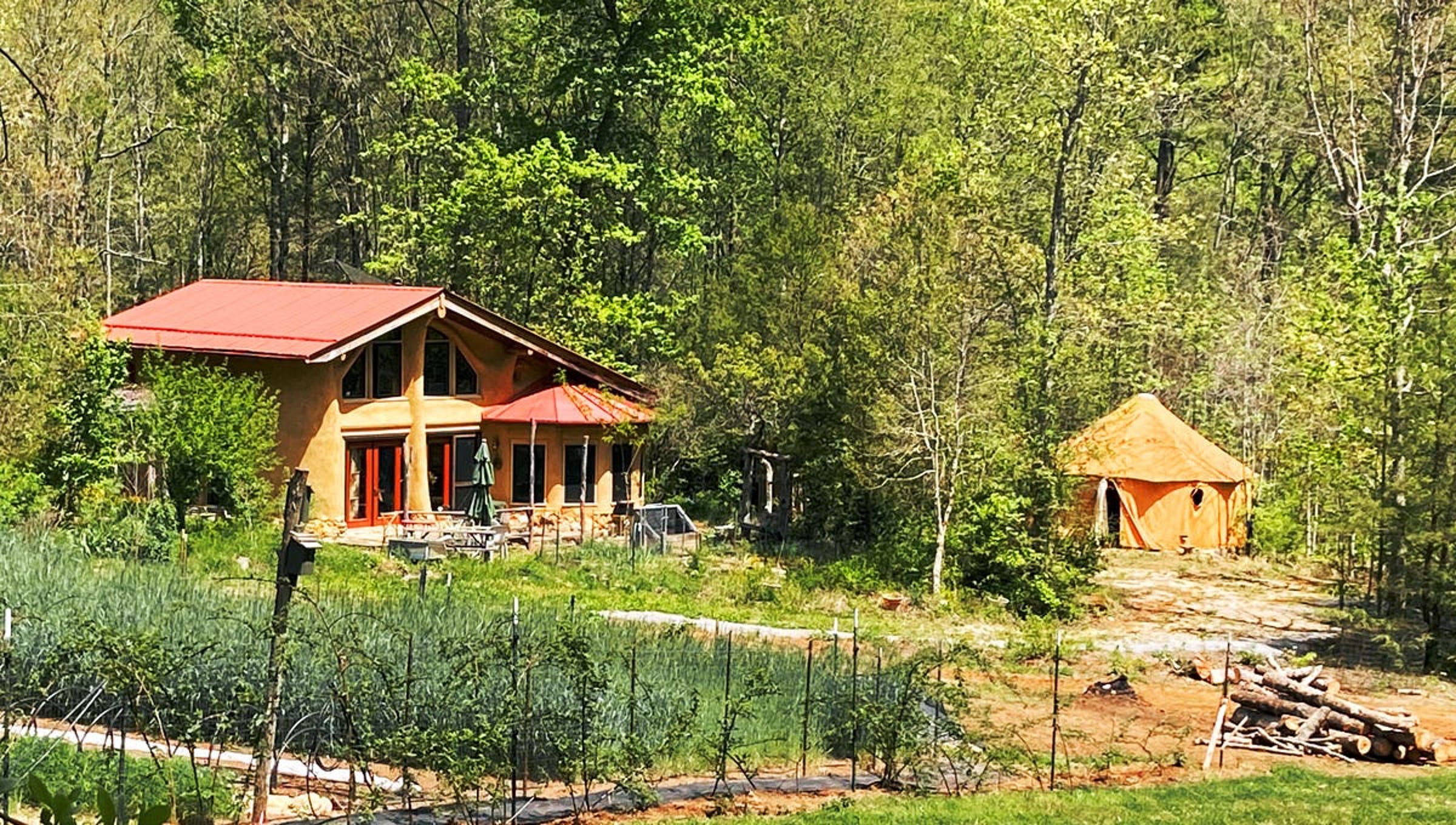
People are drawn to intentional communities for a myriad of reasons. One reason might be to pursue building an unconventional house made of straw bales and clay. Another reason might be to take part in spiritual practice with people who have similar leanings. It could be to live in harmony with nature, to grow food, or avoid governmental overreach.
Some people look at the state of our world and think the best we can do now is to become as resilient as possible — to live in a place where there’s plenty of water, good soil, and cheap land. And to find like-minded people on whom we can depend for support, to strengthen that resiliency.
And with loneliness being widespread in the United States, many people are looking for built-in friendships, seeking relationships in an intentional way.
What are intentional communities, anyway?
Intentional communities come in many shapes and sizes. They can range from people living together in one house, sharing all their income and household goods, to million-dollar homes in a planned neighborhood where people live completely autonomous lives other than perhaps a monthly potluck or game night.
Cohousing: Think of cohousing as a big, friendly neighborhood. People live in their own private homes but also share some common spaces, like a kitchen, garden, or playground. It’s having close neighbors you spend time with, and everyone pitches in to help maintain the community.
Communes: A commune is like a big family where everyone lives together, shares everything, and works together to create a self-sufficient lifestyle. It’s usually a close-knit group of people focused on living in harmony with each other and the environment.
Ecovillages: Imagine a village where everyone is committed to living sustainably. Ecovillages are designed to have a low impact on the environment, and they often include eco-friendly housing, organic farming, and renewable energy sources. It’s where everyone cares about the land they’re inhabiting and the planet as a whole.
Co-ops: A housing cooperative is like communal living, but with a focus on shared ownership and decision-making. It might be an apartment building or a single home with several bedrooms. Members pool their resources to buy a property and then live together, making decisions about how to run their home (or duplex or mobile home park, etc.) as a group. Everyone has a say in how things work.
Co-living spaces: Co-living spaces are kind of like dorms for adults. People rent a private bedroom and share common areas like kitchens, living rooms, and bathrooms. These spaces usually offer more amenities than a typical rental, and they’re great for socializing and making new friends.
The Foundation for Intentional Community (ic.org) has perhaps the most robust global directory of intentional communities. Community listings can go years without an update, however, and some communities fold without notice. Still, that’s the place to start if you’re looking to join an intentional community.
CohoUS is the website to study if you’re interested in cohousing. And the Global Ecovillage Network is a great place to learn more about ecovillages and alternative living around the world.
Another resource for intentional community is Community Finders Connect on Facebook. The founder, Cynthia Tina, can be your matchmaker to help you find the best community for you.
My Scouting Mission: Experiences and Insights
Having left behind the beiges and grays of Colorado after a long winter, I was captivated by the emerald landscape visible through the tiny jet window as we flew over North Carolina. As far as I could see, there were lush green trees and sparkly blue lakes and rivers. I could hardly believe my eyes.
Picking up my rental car and driving out of the airport in pouring rain, I headed to the first Airbnb of my adventure.
I couldn’t possibly exaggerate my host’s bubbly nature. When I knocked on her door, Shelly, a tiny 70-year-old yoga instructor, Ayurvedic aficionado and chef, almost attacked me with love and hospitality. She showed me my room and promised to make me an omelet and muffin in the morning. “Meanwhile, make yourself at home!” she said. “Be joyful!”
Living Well Ecovillage
My first community visit was at Living Well Ecovillage in Franklinville, N.C. I had dinner with a friend, Laurie, whom I’d met through Zoom. One of the first people to move there, she built a two-story house at Living Well. Some community members have come and gone over the years, she said. One issue had to do with how people wanted to keep their lawns (and their neighbors’ lawns): grass neatly mowed, or wildflowers and weeds weaving about?
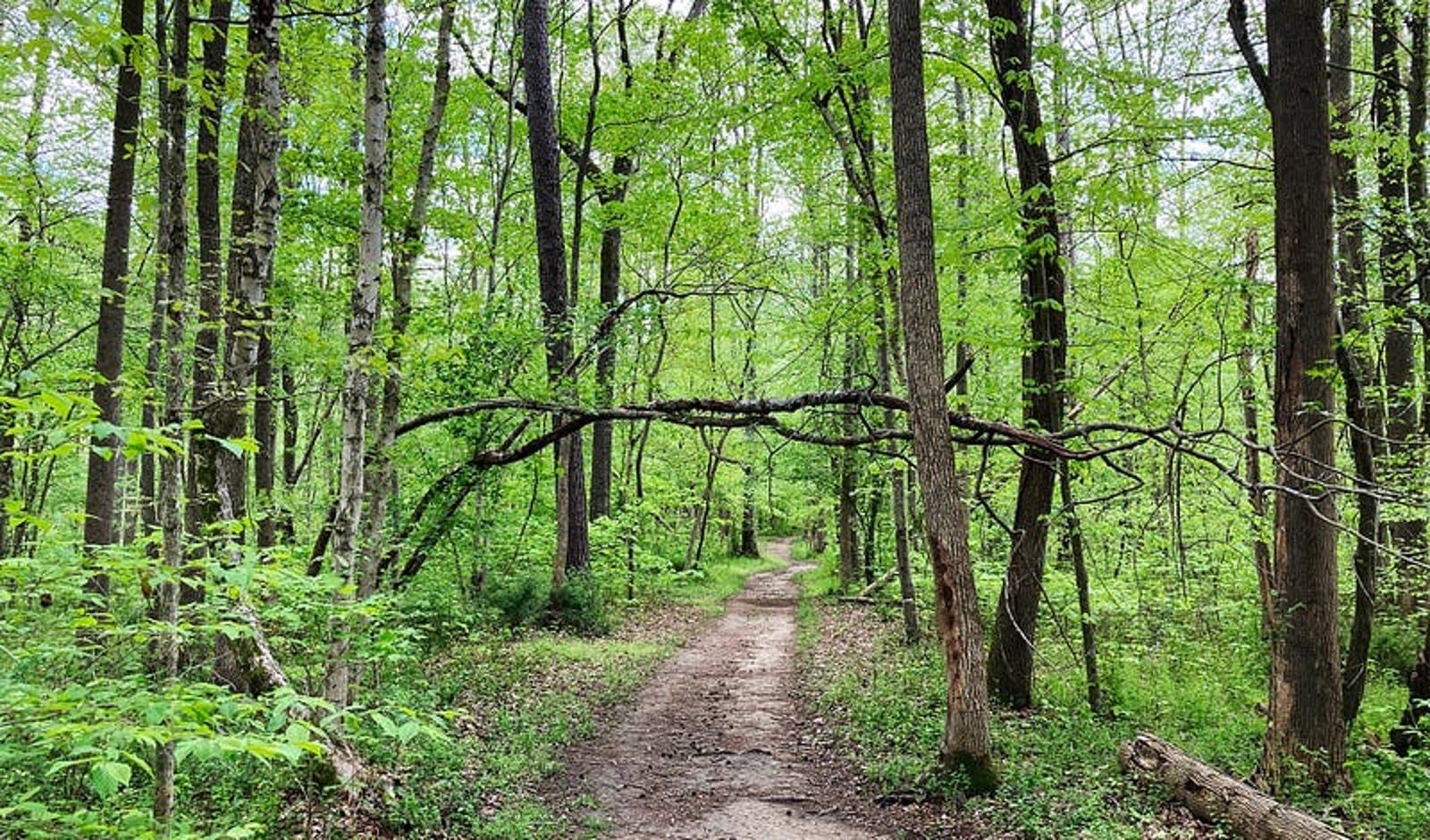
Regardless, Living Well remains a lovely little village, complete with a large community garden, the Deep River rushing nearby, a beautiful camping area, and pleasant walking trails. The community regularly hosts workshops for identifying edible plants, making solar panels and other folk wisdom. I attended a natural-building workshop there on that Saturday morning. My friend is having a tiny cottage built using cob (a mixture of clay, sand, and straw) next to her house, and we were learning how it’s mixed and applied, and how incredibly durable and long-lasting (hundreds of years!) the structures can be.
I really enjoyed my time there, visiting with some of the members and enjoying a simple lunch after our workshop. I took a long walk along the river, listening to the birds singing and enjoying the beauty and quiet of the trees surrounding me. I could hear occasional gunshots from a nearby rifle range, which was a bit off-putting, but they weren’t too loud. I could tune them out and focus on the natural sounds of water, rustling leaves, and birdsong.
Common Ground Ecovillage
Northwest of Durham, N.C., is an energetic community called Common Ground Ecovillage. I say “energetic” because this community keeps its website up to date, puts out a monthly newsletter, has regular potlucks and numerous meetings and informal gatherings. They’ve got a working farm that’s producing plenty of veggies, managed by an experienced farmer and paid staff. Volunteers also help around the farm. The one thing Common Ground doesn’t have is housing for the community.
The core community members have been together for more than 10 years. At one point, they had plans for a residential area with a common house. But then, Covid hit. Post-pandemic, those plans simply won’t work anymore, with skyrocketing costs and uncertainty in supply chains and labor markets.
So, recently, new plans have been wrangled, and it looks like the housing situation may finally be moving forward again — a huge relief to those who have worked so long and hard on this massive project.
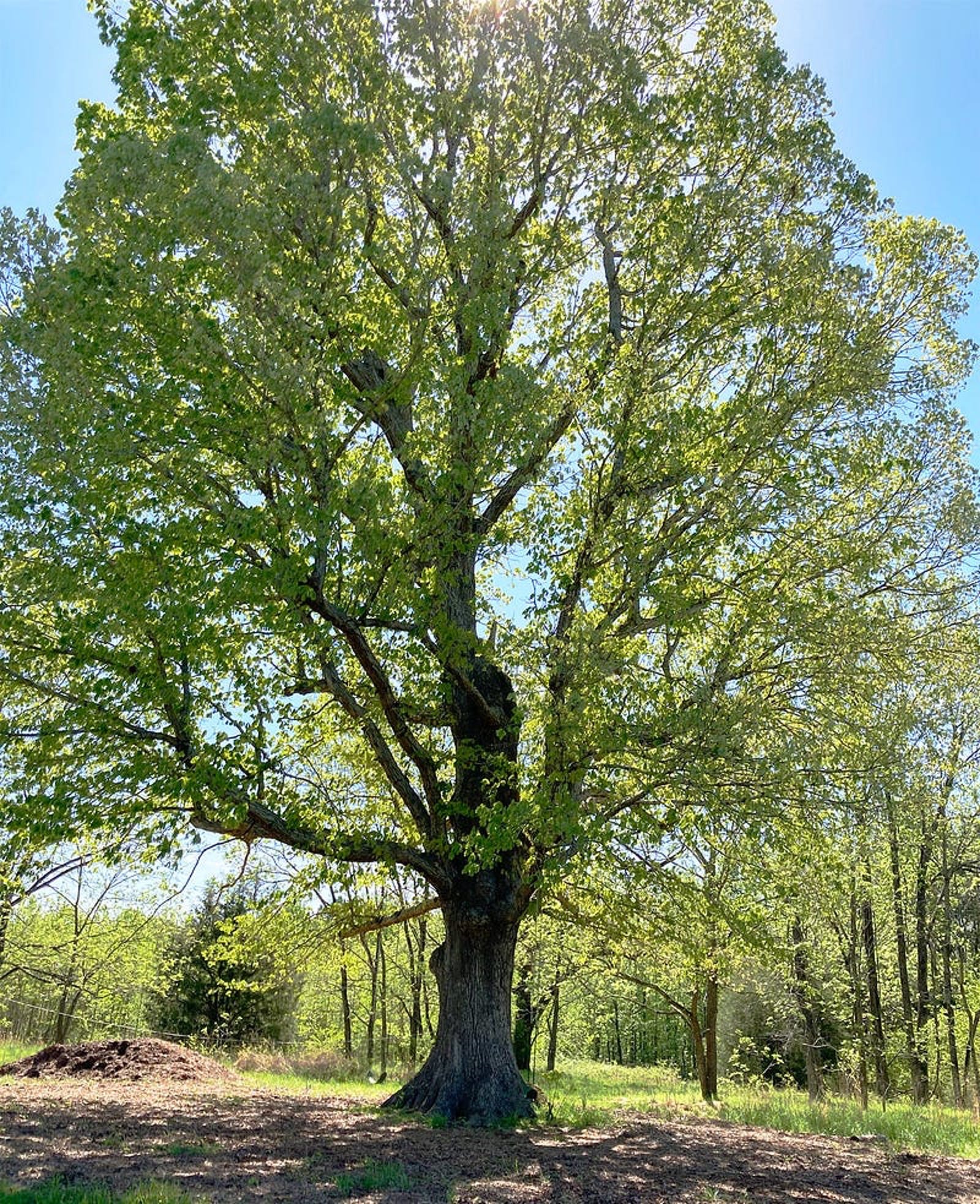
I found their dedication and progress inspiring, and this feeling only grew as I explored the property. The walk through the woods that morning was glorious. I felt embraced by the forest that surrounds the farm and the large fields that blanket this beautiful land.
I’m a city girl. I don’t know the names of many plants or trees. I can be dangerous in a garden because I can’t always tell the difference between a weed and a vegetable. But I loved being on that land, with its refreshingly cool forest, and the beautiful stream and ponds that beavers are engineering to create a world that makes sense to them. What a privilege to steward that land, to protect it, to be held by it.
Asheville and surrounding area
From Common Ground Ecovillage, I headed west to stay with a friend, Larry, in Black Mountain, N.C., a sweet little touristy town, while visiting nearby intentional communities.
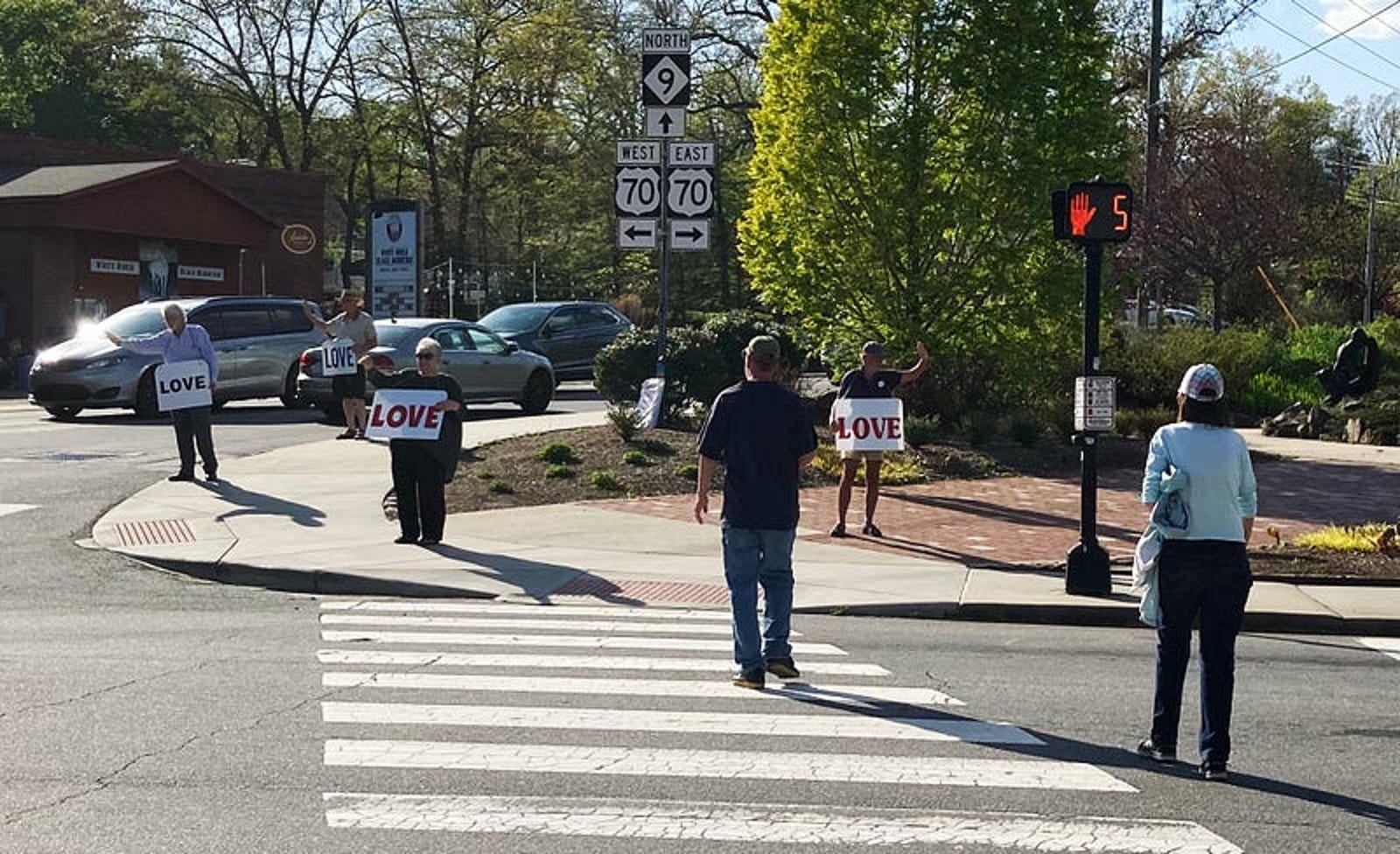
Speaking of finding and creating community, Larry has created a wonderful community for himself in Black Mountain — full of friends, volunteering, and lots of joyful activity. Here’s Larry and a few friends holding “LOVE” signs on a street corner, something they’ve been doing for four and a half years every Wednesday from 5 to 6 p.m. There’s no backing organization, no religion, no ulterior motives — they’re just spreading love in their community.
Simple Life
How should I describe Simple Life? It’s like a cross between a mobile home park and a country club development. It’s an adorable little village full of interesting tiny homes placed close enough together that you’ll be bumping into your neighbors on the regular. Simple Life has two neighborhoods. One has adult trees; the other is just getting started and is dotted with little saplings. Each neighborhood has a large community building where there are comfortable seating areas, a yoga studio, a weight room, and a seasonal pool outside. There’s also a dog park and a large fire pit for gathering in the evening in each neighborhood.
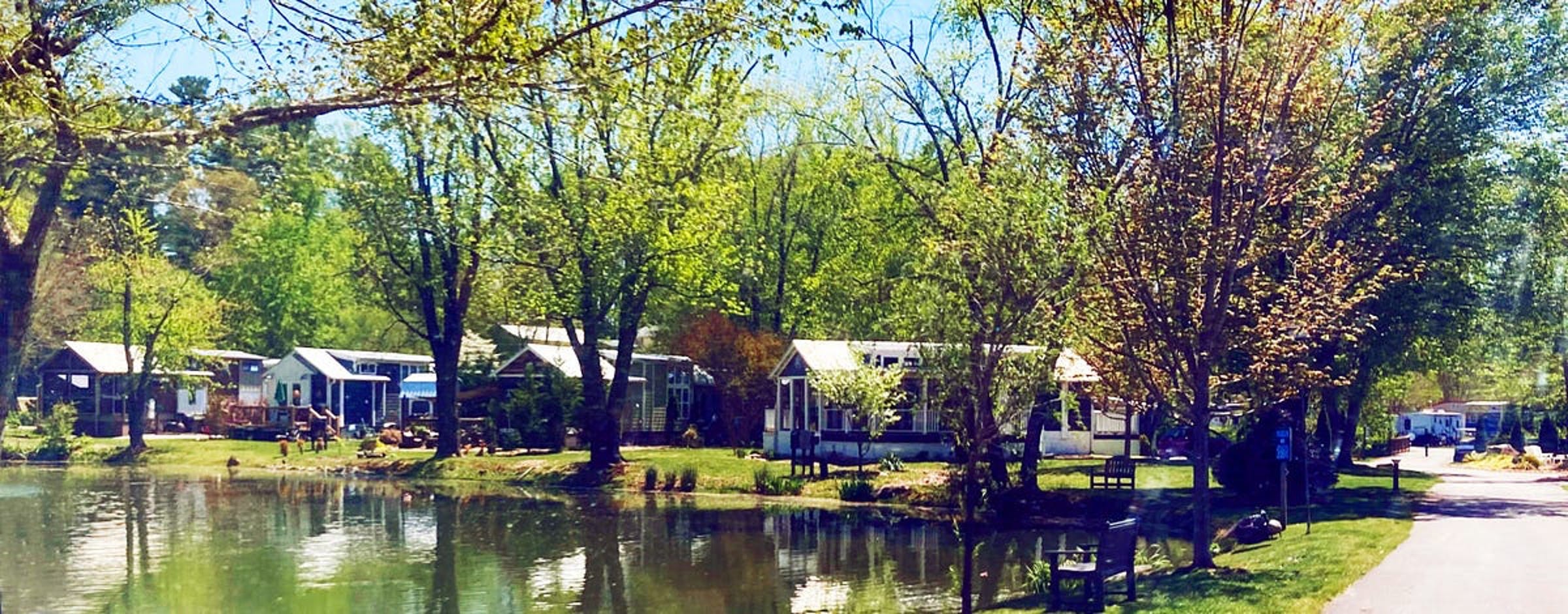
Tiny houses are purchased from Simple Life, and a “lifestyle fee” takes care of your water and sewer and all the social and physical amenities; it runs around $700 to $800 a month, depending on the size and location of your lot.
There was plenty of camaraderie evident in this community. People were genuinely friendly and seemed very happy in their tiny town.
Earthaven Ecovillage
One of the more established intentional communities in the U.S. is Earthaven, a unique ecovillage nestled in the mountains near Asheville, N.C. Established in 1994, this community focuses on sustainable living, permaculture, and fostering a cooperative lifestyle among its residents. Covering around 320 acres of lush land, Earthaven boasts off-grid homes, renewable energy systems, and organic gardens.
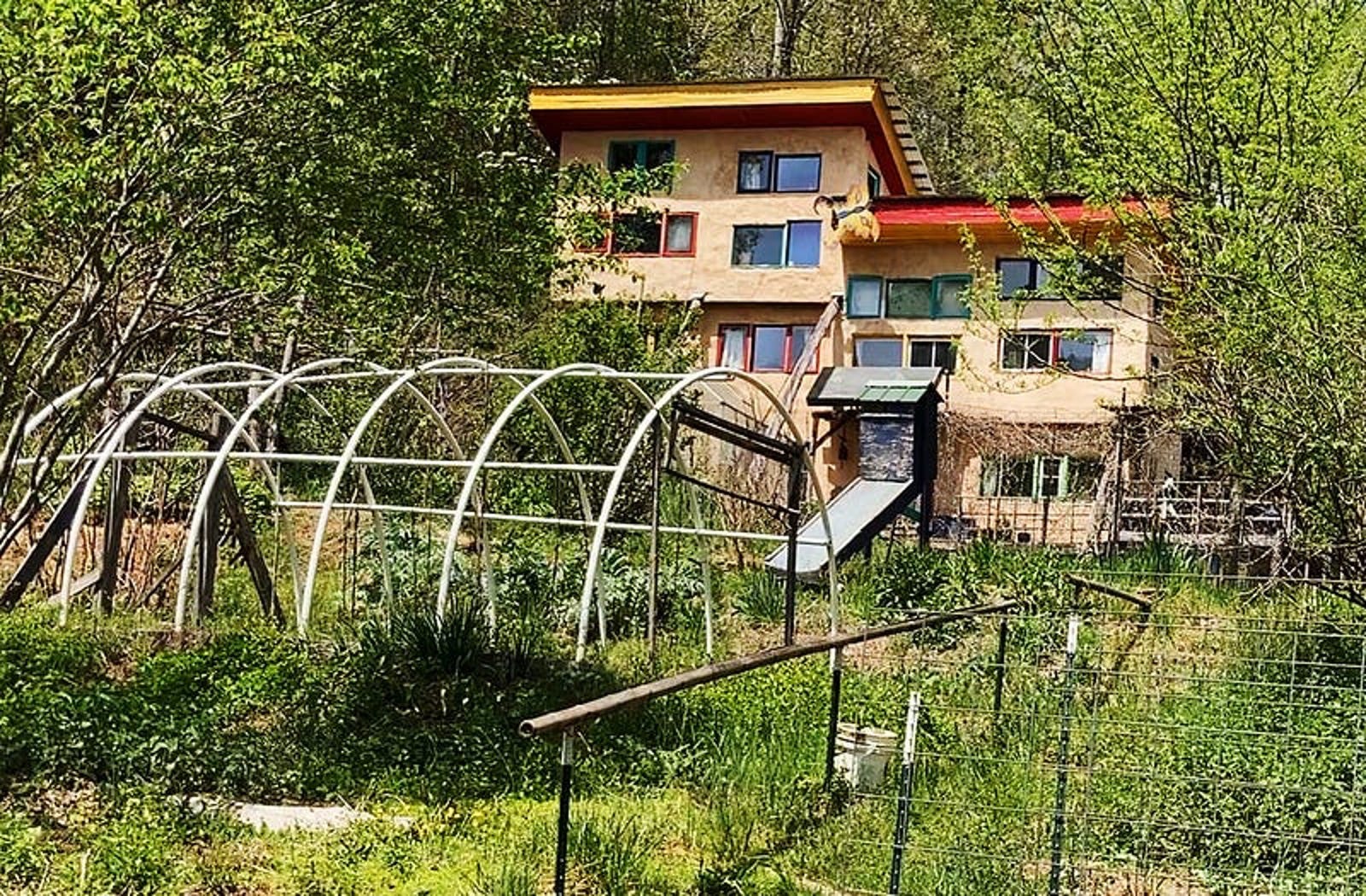
While Earthaven is probably a bit too earthy for my husband and me, visiting the community was a delightful experience.
Our tour guide had lived there with her husband for decades, and I was excited to visit their home. They live in an Earthship, an eco-friendly housing structure pioneered by architect Michael Reynolds in the 1970s. These unique “vessels,” as Reynolds likes to call them, are constructed primarily using recycled materials such as tires, cans, and bottles, and are designed to be self-sufficient and off-grid. Earthships incorporate passive solar design, natural ventilation, rainwater harvesting, and on-site wastewater treatment, allowing residents to live with minimal environmental impact. People often have full fruit and vegetable gardens — even trees — inside their homes, all part of the Earthship experience.
High Cove
Nestled in the southern Appalachian Mountains, the High Cove community has a focus on arts, the environment, and lifelong learning. High Cove doesn’t impose membership restrictions like some communities, but it seems to attract people who bring a wide range of activities and passions to the community.
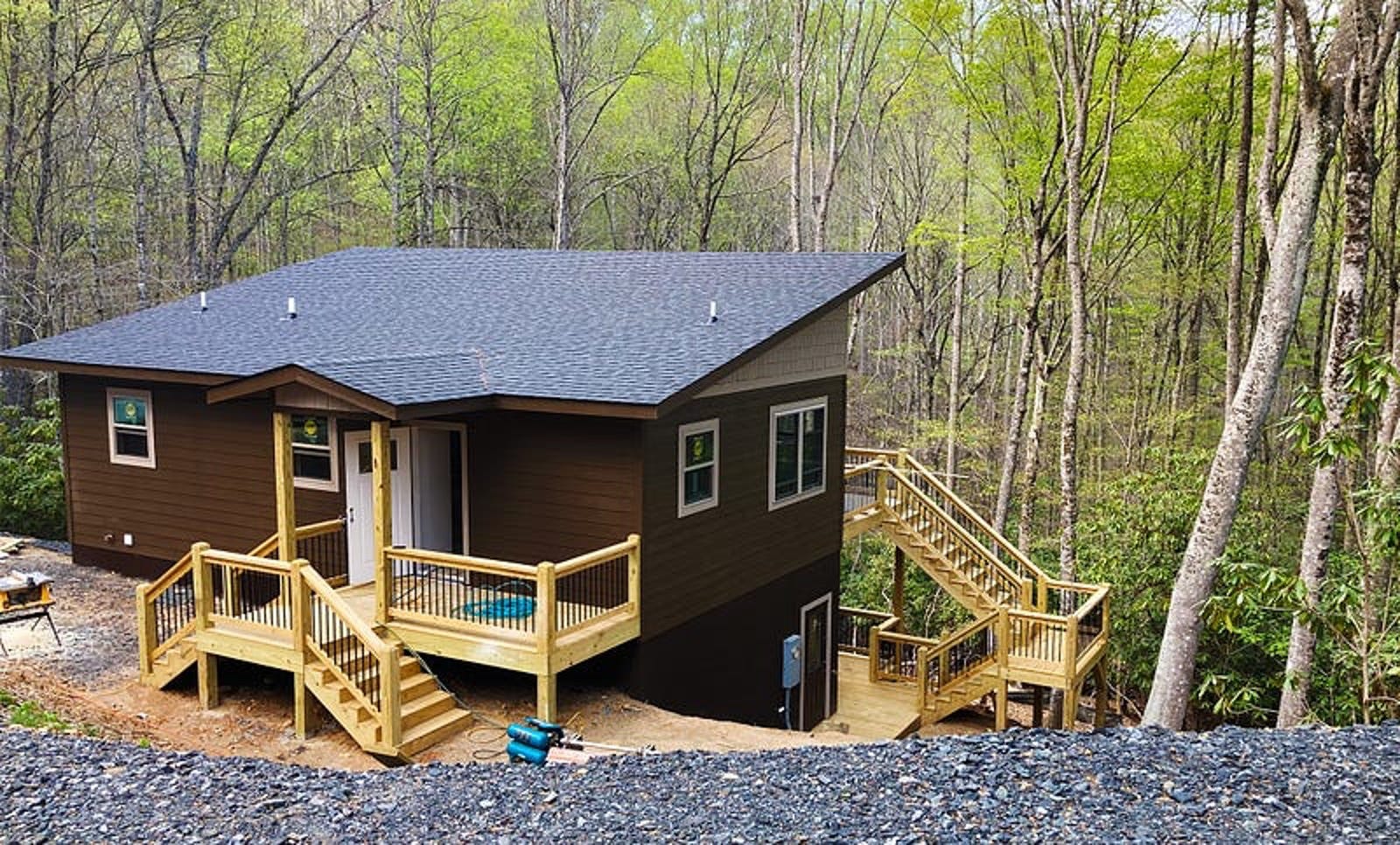
They tend to build small houses, preferring a light footprint on the land. The roads are rocky and mostly steep. You’ll get a workout walking around here, but it’s beautiful.
I stayed in a new 428-square-foot home that was available for sale for $279,000. It was sweet and comfy and felt solid, surrounded by trees and brush. I had no idea how we’d fit our stuff inside it. But people do pare down so much that they can fit in teensy homes like these and learn to live more simply with a lot less stuff to maintain.
Mountain Meadows
While up in the higher climbs north of Asheville, I visited two community-flavored developments. The first was Mountain Meadows, and it was absolutely gorgeous. It calls itself “a green, organic, and sustainable community.” It has a community garden and an orchard. The website says, “Our caring and kind design ‘listens to the land’ while fostering positive, fruitful, and conscious relationships in a pastoral setting.
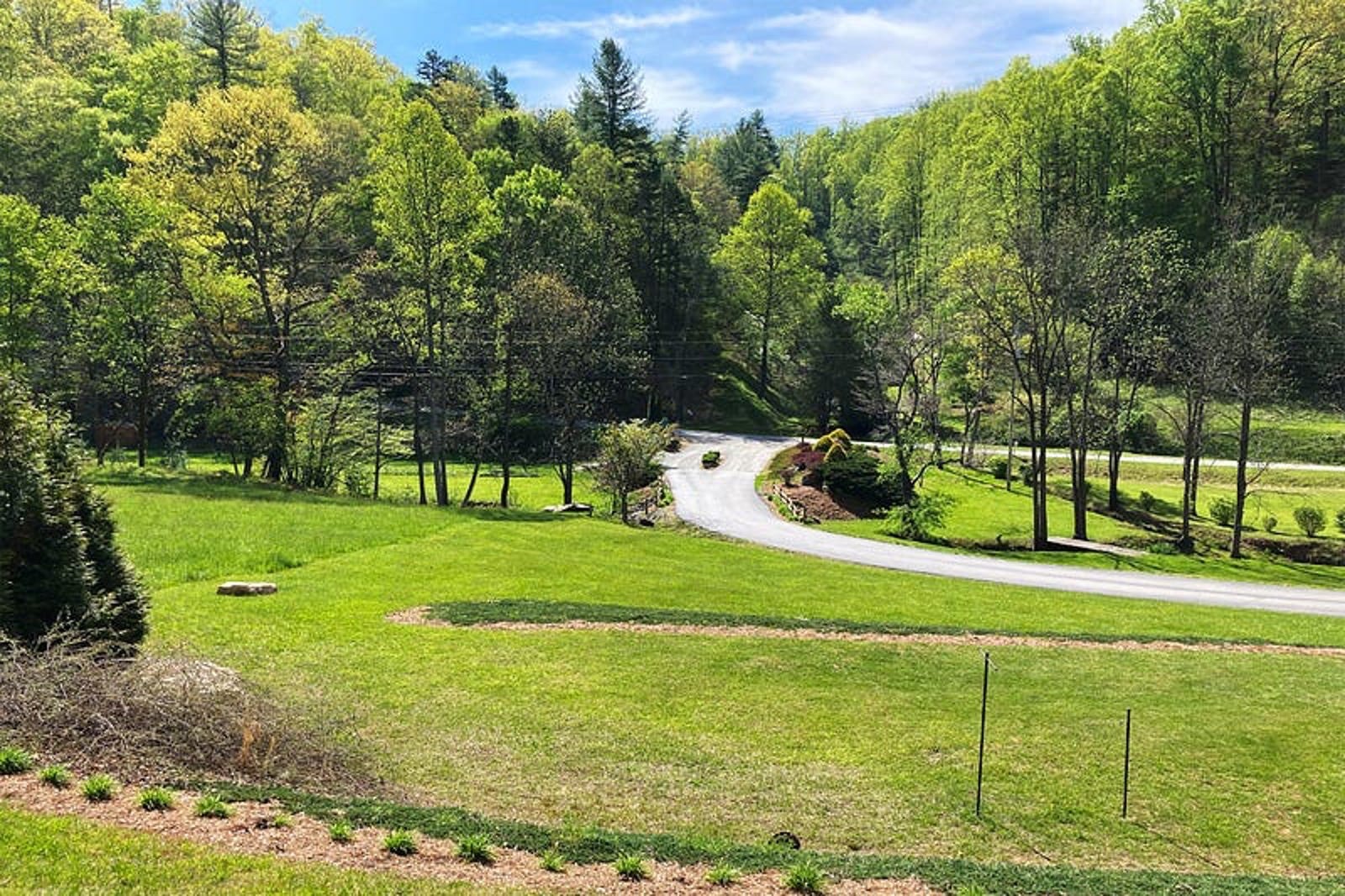
Bernie Byrne, a Vietnam War vet, is the owner and developer. He gave me an enthusiastic tour of the land and the few remaining lots. He said the community gets together to play boccie ball once a week, and they have parties for special occasions. But the houses were spread out. You weren’t likely to see your neighbors for days unless you went out of your way. Living among these steep, rocky roads is wonderful for views and seclusion, but not so great for taking walks and visiting neighbors, in my estimation.
The Cove at Celo Mountain
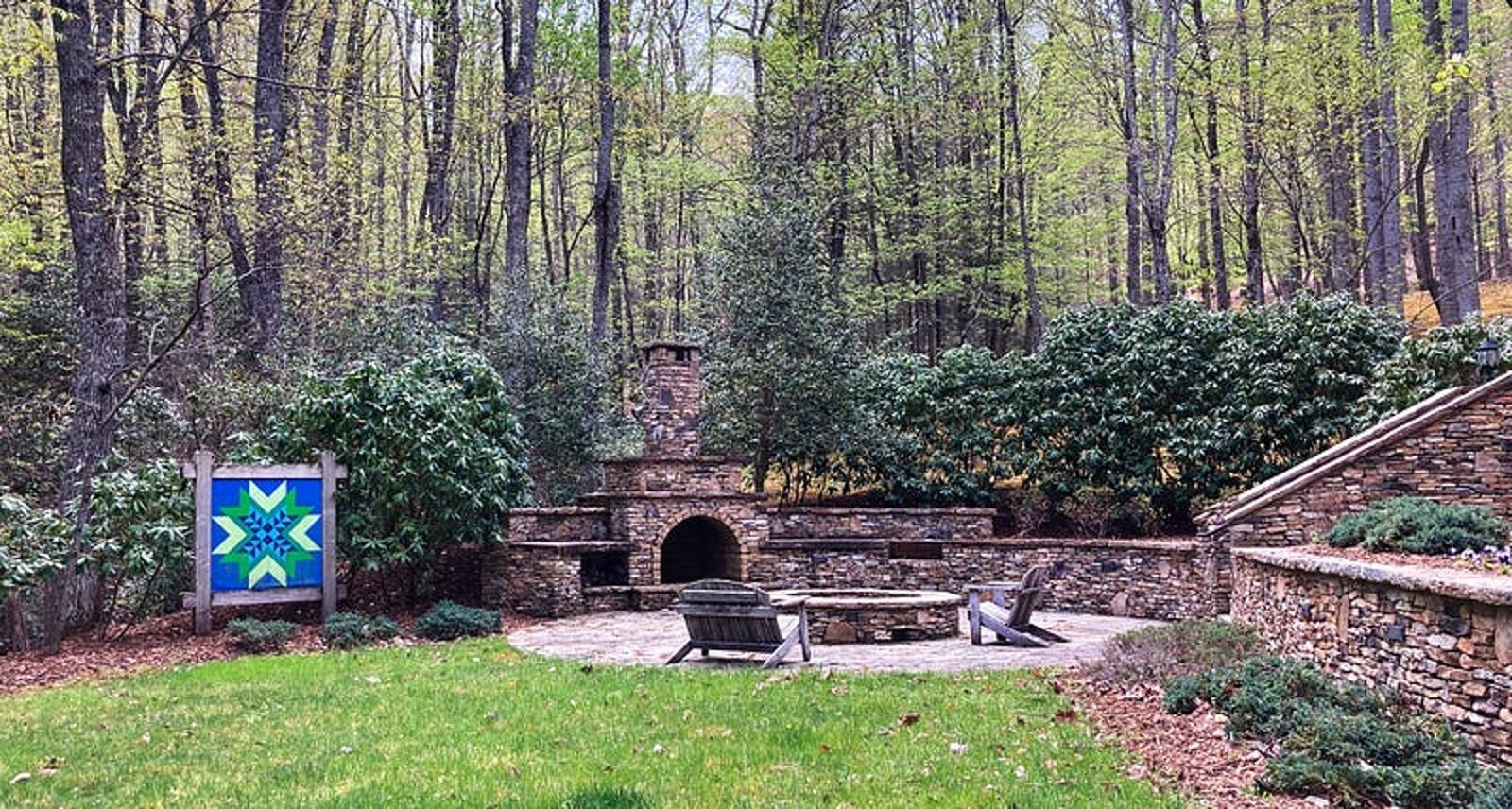
The second community I visited in the mountains was a gated development called The Cove at Celo Mountain. Behind its mountainous metal gate, the grounds were stunningly beautiful. Trout fishing and trails were big draws, but it was apparent there was very little community interaction. In fact, it felt to me like the people who move there don’t want to be found.
Valley of Light
This was a wild card. While I was getting ready for my big adventure back in Colorado, I had every day mapped out in North Carolina except one. As I was going through various lists of intentional communities, I came across Valley of Light. I’d never heard of it. I looked for it on the map and saw it was just over the Virginia state line, not too far from the mountain communities I planned to visit.
As I visited the website, I discovered a video of Barbara Marx Hubbard, who previously had been a neighbor of mine at Sunrise Ranch. Barbara was a well-known futurist, had written several books, and was a speaker at various events around the world. (She died in 2019.)
Here she was in a video on the Valley of Light website, talking about how this place was creating what she had been promoting for decades — the idea of a Peace Pentagon that would become a hub whose purpose is to build a new world based on what’s working. “What’s working in health, in education, in economics, in infrastructure, science and technology, toward a world of love, compassion, sustainability, and evolvability,” Barbara said in the 2015 video.
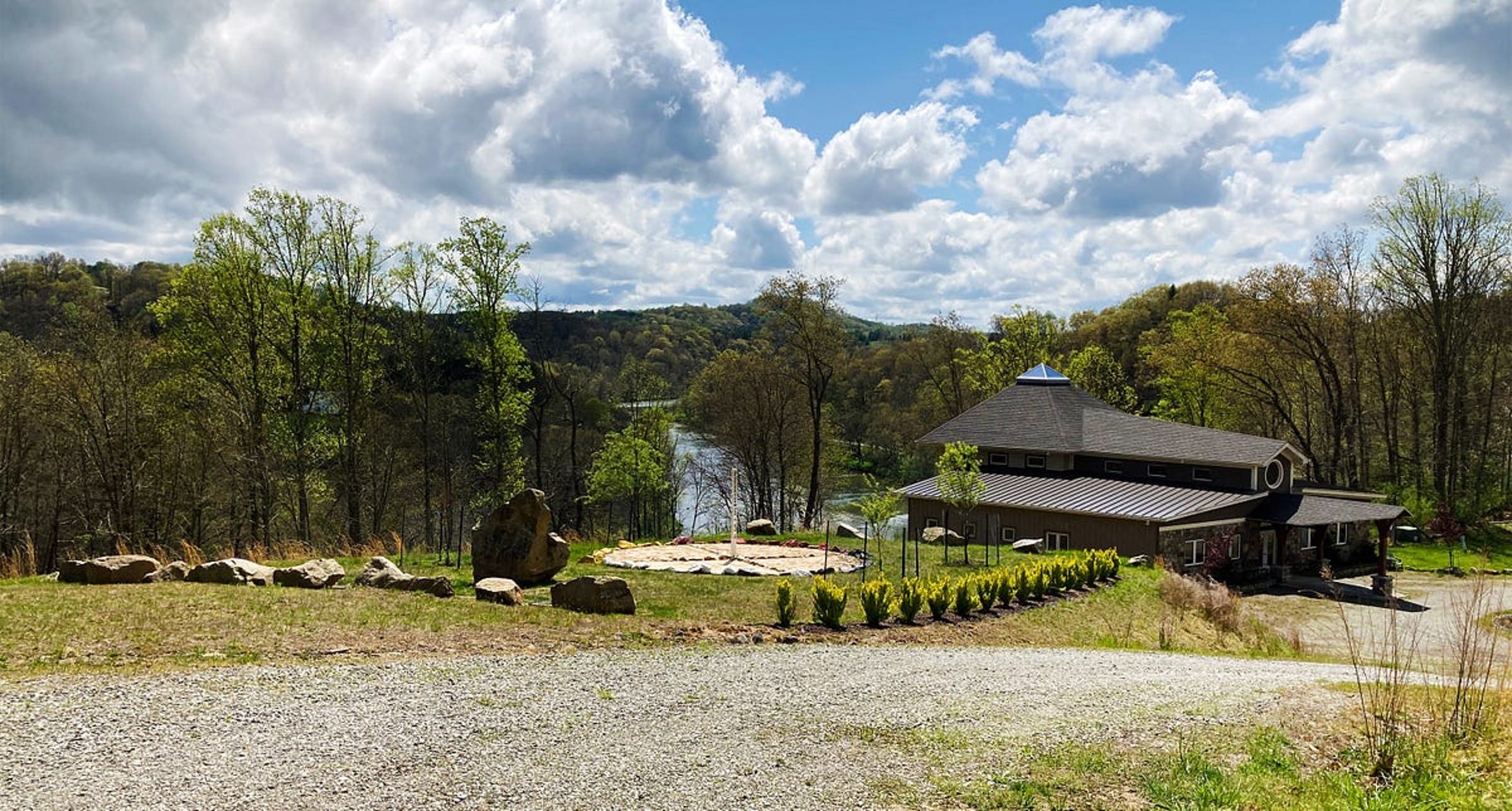
“Well,” I thought, as I saw my dear friend in the video, “if Barbara is endorsing this place, I need to check it out.” So I made plans to scooch up to southern Virginia for a tour of the Valley of Light campus, where the Peace Pentagon is, and reserved a room in the Oracle Guest House there.
While there, I met a woman, Debby, who was doing the same thing as me — visiting intentional communities to find where she might fit. We got along smashingly, having so much in common. We loved our tour and had a long talk with the Rev. Laura George, the founder of the community and its Oracle Institute. George is doing her best to be a beacon of light in this crazy world. She’s one of the Evolutionary Leaders, “a group of thought leaders from diverse disciplines who come together in synergy to help support a shift in consciousness,” the organization’s website says.
The Oracle Institute is an educational charity that operates a spirituality school and an award-winning publishing house. “Oracle is a spiritual think tank,” the website explains, “and we study the nexus between religion, politics, civil rights, and human evolution.”
The picturesque campus is situated along the New River, which is among the oldest rivers in the world. There are camping grounds, sweet cottages, a labyrinth, medicine wheel, and other outdoor sanctuaries … a lot to like. The community eats together once a week on Sundays. Members contribute to the community by working a few hours a week in their “paths,” or areas of expertise.
Back to Common Ground
My odyssey was coming to an end. It was an amazing adventure, talking to so many people, visiting so many places.
Coming full circle, I drove a couple of hours from southern Virginia to Common Ground Ecovillage. The farm was rocking with people visiting for a farm tour, part of an open house for the public to check out their CSA (Community-Supported Agriculture) program.
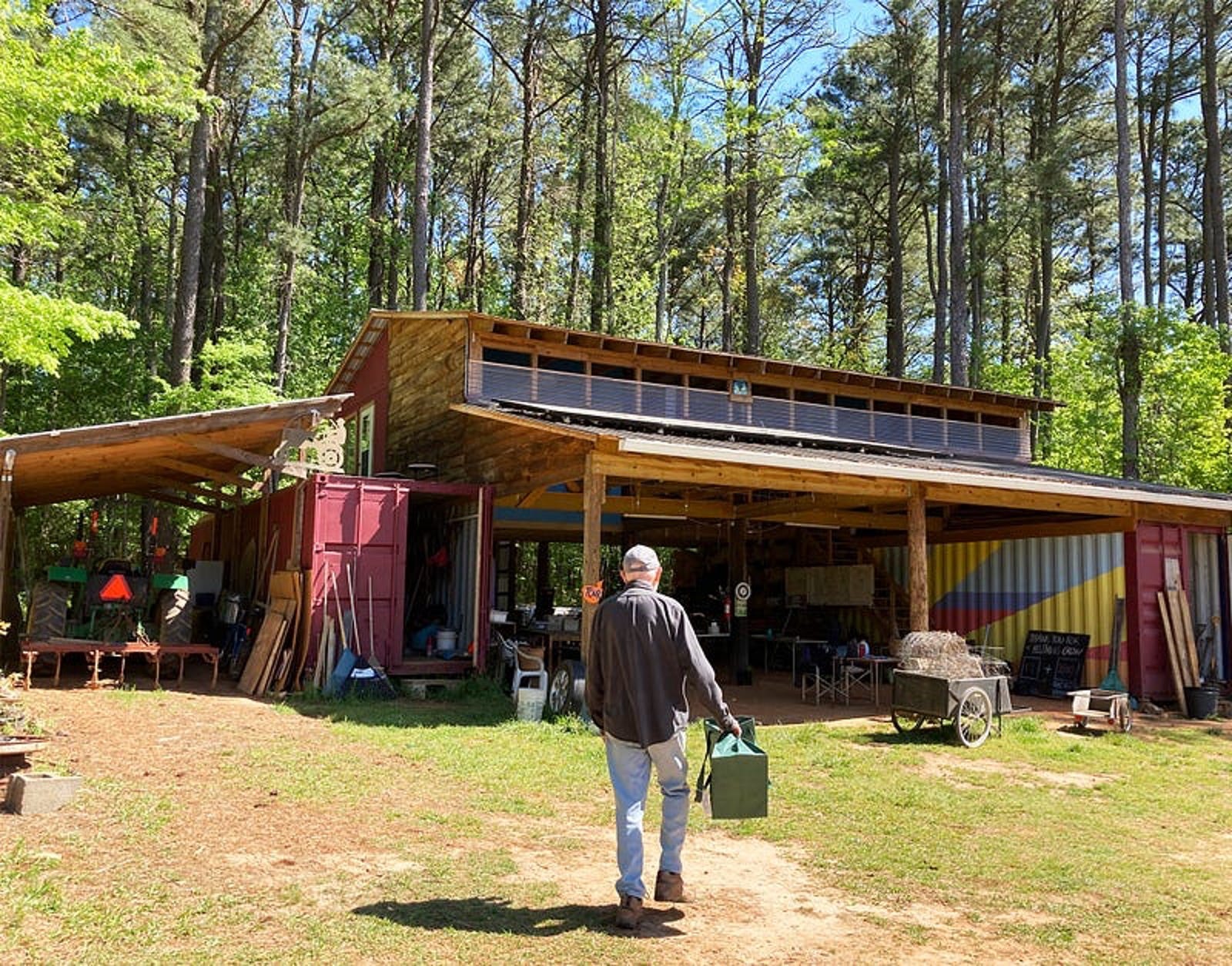
I met up with a few of my new friends there and talked to Anthony, one of the founders of Common Ground, about natural building of all kinds — cob, straw bale, hempcrete, straw forms for walls, stone — and the prospects for housing on the grounds there. He was very optimistic, even excited about the possibilities that were emerging. He said he thought they could begin construction within a year.
As we talked, we walked in the cool shade of the forest. Again, I felt so comfortable there among the trees and flowers and sparkling streams.
Early morning at the airport
Incredibly, the security absurdity at the Raleigh-Durham airport proved to be an even greater spectacle than my experience at the Denver airport 10 days prior.
After navigating what felt like an endless labyrinth of winding lines, we reached the drug-dog-sniffing area. It’s a surreal experience to have a security agent briskly choreograph your movements at 6:15 a.m.: “Three lines, please — blue line, yellow line, green line! Three people, all at once, behind the red line! Wait … and go!”
That poor dog, sniffing everyone’s butt all day long. And the poor security agent trailing behind him, endlessly pacing on that cold concrete floor.
Some of us glanced at each other, jostled and jumbled together. Some bristled at the inconvenience, while some of us joked, making the best of our unusual dance. I kept smiling, just because I could.
Community, that sense of connection and belonging, is where you find it. It can be in your neighborhood or on your Zoom screen when you’re chatting with friends or colleagues. Community can be found at the grocery store and in the airport.
Creating community, however brief, can be done anywhere, and this trip deepened that discovery. Community is where you find it and where you foster it. And it’s so worth the effort.
Update: My travels to North Carolina and Virginia took place in May 2023, long before Hurricane Helene wreaked havoc in some of the areas that I had visited, around Asheville and Black Mountain. Earthaven Ecovillage was badly damaged in the September 2024 storm; I’m not aware of how badly the other intentional communities in the state were affected.
In November 2023, my husband and I moved to Virginia to stay at Valley of Light for three months, then moved to Mebane, North Carolina, to be near Common Ground. Alas, we ended up moving to Chapel Hill in May 2024, where we live in a “regular” neighborhood that’s very friendly and community-oriented. We feel extremely fortunate to have found our new home.